Year 6 Adverbs, Adverbial Phrases and Clauses Worksheets with Answers
✨ Develop confident grammar and descriptive writing skills
Help learners understand and apply adverbs, adverbial phrases and adverbial clauses with this progressive Year 6 English worksheet resource. Activities move from identifying and classifying adverbs to rearranging sentences and using varied adverbials in original paragraphs.
📚 What is included
• 3 printable worksheet pages
• 3 corresponding answer pages
• 6 A4 pages in total
• Identification, classification and sentence-completion activities
• Structured and extended writing tasks
• Possible and example answers for open-ended questions
• A QR code providing access to a short supporting video about adverbs
✏️ Skills covered
• Identifying adverbs and adverbial phrases
• Recognising adverbials of manner, time, place, degree and frequency
• Distinguishing between adverbs, adverbial phrases and adverbial clauses
• Adding suitable adverbials to sentences
• Moving adverbs and adverbial phrases to the beginning of sentences
• Using fronted adverbials with appropriate punctuation
• Improving sentence detail and variety
• Writing descriptive paragraphs
• Using adverbials to create dramatic or tense effects
📈 Learning progression
The resource begins with accessible identification and classification activities. Learners then complete and rearrange sentences before progressing to adverbial clauses and independent paragraph writing.
The final tasks encourage pupils to make deliberate vocabulary and sentence-structure choices when describing a busy morning or a dramatic moment.
🎯 Curriculum and assessment relevance
These worksheets support upper-primary grammar, punctuation and writing development. They provide useful practice for the language and writing skills used in NAPLAN literacy assessments and UK Key Stage 2 SATs.
This resource is not officially endorsed by, affiliated with or formally aligned to NAPLAN or SATs.
🏫 Suggested ways to use this resource
• Whole-class grammar lessons
• Independent classroom practice
• Guided literacy groups
• Homework or home learning
• Revision and assessment preparation
• Morning work or lesson starters
• Intervention and additional support
• Extension writing activities
• Supply or substitute-teacher lessons
👩🏫 Suitable for
• Year 6 pupils
• Upper-primary learners
• Elementary students developing grammar and writing skills
• Classroom teachers
• Tutors and intervention teachers
• Homeschooling families
• English and language arts lessons
• Learners who need structured grammar revision or writing practice
📄 Product details
• Format: Digital PDF
• Page size: A4
• Total pages: 6
• Worksheet pages: 3
• Answer pages: 3
• Language: British English
• Subject: English grammar and writing
• Delivery: Digital download
This is a digital PDF resource. No physical item will be supplied. The availability and content of the externally hosted video accessed through the QR code remain under the control of its original creator.
Year 6 Adverbs, Adverbial Phrases and Clauses Worksheets with Answers
✨ Develop confident grammar and descriptive writing skills
Help learners understand and apply adverbs, adverbial phrases and adverbial clauses with this progressive Year 6 English worksheet resource. Activities move from identifying and classifying adverbs to rearranging sentences and using varied adverbials in original paragraphs.
📚 What is included
• 3 printable worksheet pages
• 3 corresponding answer pages
• 6 A4 pages in total
• Identification, classification and sentence-completion activities
• Structured and extended writing tasks
• Possible and example answers for open-ended questions
• A QR code providing access to a short supporting video about adverbs
✏️ Skills covered
• Identifying adverbs and adverbial phrases
• Recognising adverbials of manner, time, place, degree and frequency
• Distinguishing between adverbs, adverbial phrases and adverbial clauses
• Adding suitable adverbials to sentences
• Moving adverbs and adverbial phrases to the beginning of sentences
• Using fronted adverbials with appropriate punctuation
• Improving sentence detail and variety
• Writing descriptive paragraphs
• Using adverbials to create dramatic or tense effects
📈 Learning progression
The resource begins with accessible identification and classification activities. Learners then complete and rearrange sentences before progressing to adverbial clauses and independent paragraph writing.
The final tasks encourage pupils to make deliberate vocabulary and sentence-structure choices when describing a busy morning or a dramatic moment.
🎯 Curriculum and assessment relevance
These worksheets support upper-primary grammar, punctuation and writing development. They provide useful practice for the language and writing skills used in NAPLAN literacy assessments and UK Key Stage 2 SATs.
This resource is not officially endorsed by, affiliated with or formally aligned to NAPLAN or SATs.
🏫 Suggested ways to use this resource
• Whole-class grammar lessons
• Independent classroom practice
• Guided literacy groups
• Homework or home learning
• Revision and assessment preparation
• Morning work or lesson starters
• Intervention and additional support
• Extension writing activities
• Supply or substitute-teacher lessons
👩🏫 Suitable for
• Year 6 pupils
• Upper-primary learners
• Elementary students developing grammar and writing skills
• Classroom teachers
• Tutors and intervention teachers
• Homeschooling families
• English and language arts lessons
• Learners who need structured grammar revision or writing practice
📄 Product details
• Format: Digital PDF
• Page size: A4
• Total pages: 6
• Worksheet pages: 3
• Answer pages: 3
• Language: British English
• Subject: English grammar and writing
• Delivery: Digital download
This is a digital PDF resource. No physical item will be supplied. The availability and content of the externally hosted video accessed through the QR code remain under the control of its original creator.

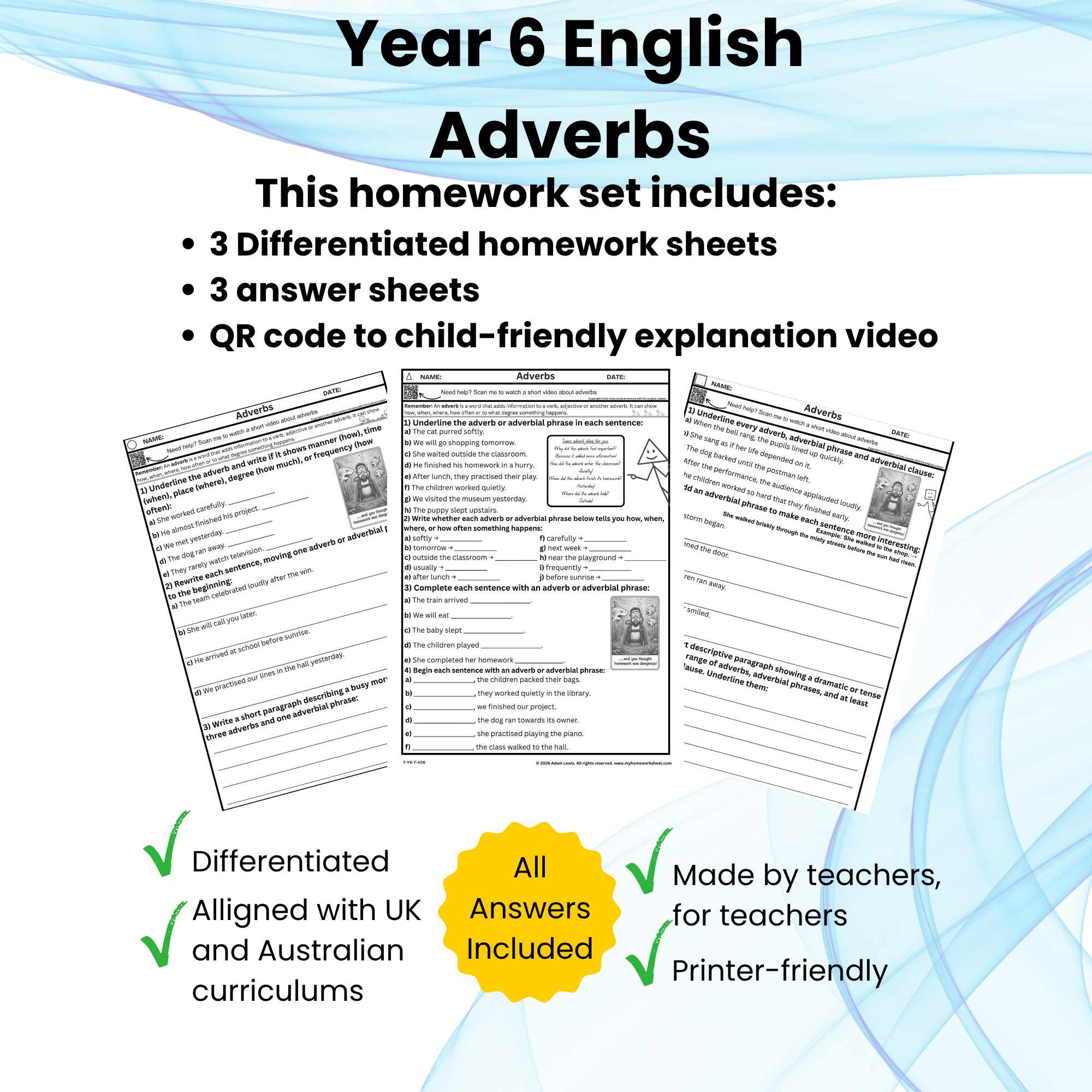 Image 1 of 1