This Year 3 Suffixes: -er and -est worksheet set helps children practise using comparative and superlative adjectives in a clear, structured way. Pupils learn that -er is used to compare two things, while -est is used to compare more than two things.
The activities include adding -er and -est to root words, choosing the correct spelling, completing sentences, rewriting incorrect sentences and writing their own sentences using comparative and superlative words. The set includes common spelling patterns such as changing y to i, dropping the final e, and doubling the final consonant before adding the suffix.
This worksheet set is ideal for Year 3 spelling, grammar and English homework, classroom practice, intervention work or revision. It also helps build the spelling and grammar foundations children need for later KS2 SATs preparation and supports key spelling skills useful for NAPLAN language conventions practice.
What’s Included
Three differentiated Year 3 worksheets:
Triangles – Easier Level
Pupils complete tables, circle correct spellings, choose the correct -er or -est word in sentences and write short sentences using target words.
Circles – Middle Level
Pupils practise a wider range of spelling patterns, including braver/bravest, heavier/heaviest, hotter/hottest, thinner/thinnest and noisier/noisiest.
Squares – Harder Level
Pupils apply their knowledge by rewriting incorrect sentences and using more challenging -er and -est words in their own writing.
Full answer sheets are included for all three levels.
Skills Covered
Adding the suffixes -er and -est
Using comparative and superlative adjectives
Changing y to i before adding a suffix
Dropping the final e before adding a suffix
Doubling the final consonant before adding a suffix
Choosing correct spellings
Completing sentences with the correct word
Rewriting sentences accurately
Writing sentences using target spelling words
Examples of Words Included
bigger
biggest
funnier
funniest
braver
bravest
larger
largest
heavier
heaviest
noisier
noisiest
thinner
thinnest
hotter
hottest
Perfect For
Year 3 English lessons
Spelling homework
Grammar practice
Literacy centres
Morning work
Revision tasks
Intervention groups
Home learning
KS2 spelling preparation
NAPLAN language conventions practice
Why Teachers and Parents Will Find It Useful
This resource is simple to print, easy to use and clearly differentiated. The three levels allow children to work at an appropriate level while still practising the same core spelling focus. The included answer sheets make marking quicker and support independent checking.
NAPLAN and SATs Link
Although this worksheet is written for Year 3 pupils, the spelling and grammar skills practised here support the wider English knowledge children need as they move towards upper Key Stage 2. Understanding suffixes, spelling patterns and comparative language helps pupils prepare for future KS2 SATs-style grammar and spelling questions. It also supports skills tested in NAPLAN language conventions, especially spelling accuracy, word forms and grammar awareness.
This Year 3 Suffixes: -er and -est worksheet set helps children practise using comparative and superlative adjectives in a clear, structured way. Pupils learn that -er is used to compare two things, while -est is used to compare more than two things.
The activities include adding -er and -est to root words, choosing the correct spelling, completing sentences, rewriting incorrect sentences and writing their own sentences using comparative and superlative words. The set includes common spelling patterns such as changing y to i, dropping the final e, and doubling the final consonant before adding the suffix.
This worksheet set is ideal for Year 3 spelling, grammar and English homework, classroom practice, intervention work or revision. It also helps build the spelling and grammar foundations children need for later KS2 SATs preparation and supports key spelling skills useful for NAPLAN language conventions practice.
What’s Included
Three differentiated Year 3 worksheets:
Triangles – Easier Level
Pupils complete tables, circle correct spellings, choose the correct -er or -est word in sentences and write short sentences using target words.
Circles – Middle Level
Pupils practise a wider range of spelling patterns, including braver/bravest, heavier/heaviest, hotter/hottest, thinner/thinnest and noisier/noisiest.
Squares – Harder Level
Pupils apply their knowledge by rewriting incorrect sentences and using more challenging -er and -est words in their own writing.
Full answer sheets are included for all three levels.
Skills Covered
Adding the suffixes -er and -est
Using comparative and superlative adjectives
Changing y to i before adding a suffix
Dropping the final e before adding a suffix
Doubling the final consonant before adding a suffix
Choosing correct spellings
Completing sentences with the correct word
Rewriting sentences accurately
Writing sentences using target spelling words
Examples of Words Included
bigger
biggest
funnier
funniest
braver
bravest
larger
largest
heavier
heaviest
noisier
noisiest
thinner
thinnest
hotter
hottest
Perfect For
Year 3 English lessons
Spelling homework
Grammar practice
Literacy centres
Morning work
Revision tasks
Intervention groups
Home learning
KS2 spelling preparation
NAPLAN language conventions practice
Why Teachers and Parents Will Find It Useful
This resource is simple to print, easy to use and clearly differentiated. The three levels allow children to work at an appropriate level while still practising the same core spelling focus. The included answer sheets make marking quicker and support independent checking.
NAPLAN and SATs Link
Although this worksheet is written for Year 3 pupils, the spelling and grammar skills practised here support the wider English knowledge children need as they move towards upper Key Stage 2. Understanding suffixes, spelling patterns and comparative language helps pupils prepare for future KS2 SATs-style grammar and spelling questions. It also supports skills tested in NAPLAN language conventions, especially spelling accuracy, word forms and grammar awareness.

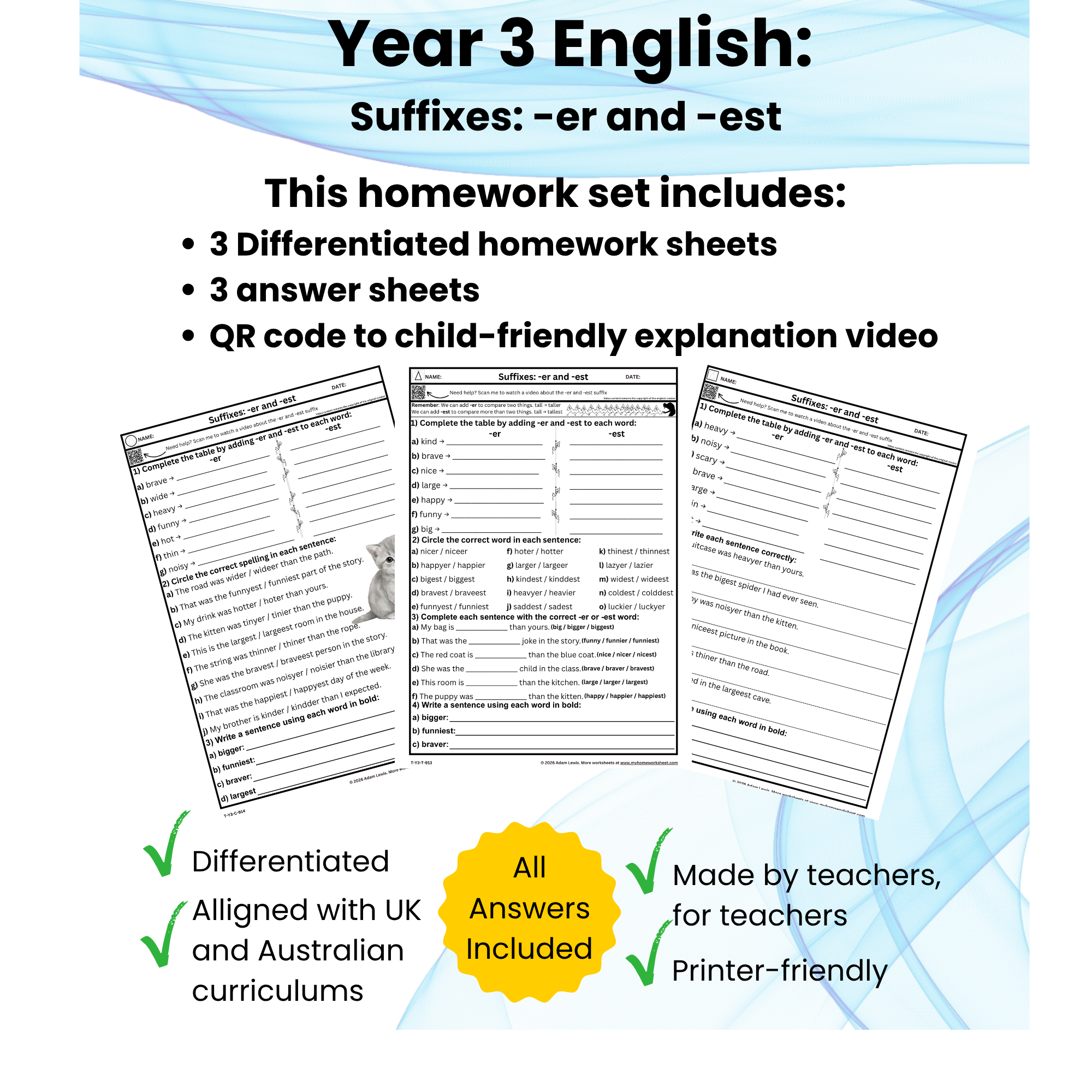 Image 1 of 1