These Year 3 digital to analogue time worksheets are designed to help pupils confidently convert digital times into analogue clocks by drawing the hour and minute hands accurately.
The set is clearly differentiated to support mixed-ability classes and homework tasks, progressing from simpler half-hour and o’clock times to more challenging minute-level times using both 12-hour and 24-hour digital formats.
Pupils are encouraged to use a ruler to draw their clock hands, promoting precision and careful placement. Each worksheet includes a worked example and a QR code linking to a short video explanation to support independent learning at home.
What’s included:
Triangles (Lower) – o’clock and half-hour times, including 24-hour digital times
Circles (Middle) – mixed times including quarter hours and 5-minute intervals
Squares (Higher) – challenging minute-level times (e.g. 10:37, 18:52, 20:24)
Answer sheets for all levels (answers accepted within a few minutes either side)
Clear, uncluttered clock faces ready for drawing
Printable, classroom-ready format
Skills covered:
Converting digital time to analogue
Understanding the position of the hour hand between numbers
Reading time to the nearest minute
Interpreting 12-hour and 24-hour clock formats
Developing accuracy and confidence with analogue clocks
These worksheets are ideal for classwork, homework, interventions, catch-up sessions, or revision, and pair well with practical clock resources.
Curriculum Alignment
UK National Curriculum (Year 3 – Measurement: Time)
Aligned with statutory requirements to:
Tell and write the time from an analogue clock
Read time to the nearest minute
Use vocabulary such as past, to, quarter, half
Use and convert between 12-hour and 24-hour digital time
Australian Curriculum (Year 3 – Measurement)
Aligned with outcomes that require students to:
Tell time to the minute
Interpret and represent time on analogue clocks
Connect digital and analogue representations
Apply understanding of time in practical contexts
These Year 3 digital to analogue time worksheets are designed to help pupils confidently convert digital times into analogue clocks by drawing the hour and minute hands accurately.
The set is clearly differentiated to support mixed-ability classes and homework tasks, progressing from simpler half-hour and o’clock times to more challenging minute-level times using both 12-hour and 24-hour digital formats.
Pupils are encouraged to use a ruler to draw their clock hands, promoting precision and careful placement. Each worksheet includes a worked example and a QR code linking to a short video explanation to support independent learning at home.
What’s included:
Triangles (Lower) – o’clock and half-hour times, including 24-hour digital times
Circles (Middle) – mixed times including quarter hours and 5-minute intervals
Squares (Higher) – challenging minute-level times (e.g. 10:37, 18:52, 20:24)
Answer sheets for all levels (answers accepted within a few minutes either side)
Clear, uncluttered clock faces ready for drawing
Printable, classroom-ready format
Skills covered:
Converting digital time to analogue
Understanding the position of the hour hand between numbers
Reading time to the nearest minute
Interpreting 12-hour and 24-hour clock formats
Developing accuracy and confidence with analogue clocks
These worksheets are ideal for classwork, homework, interventions, catch-up sessions, or revision, and pair well with practical clock resources.
Curriculum Alignment
UK National Curriculum (Year 3 – Measurement: Time)
Aligned with statutory requirements to:
Tell and write the time from an analogue clock
Read time to the nearest minute
Use vocabulary such as past, to, quarter, half
Use and convert between 12-hour and 24-hour digital time
Australian Curriculum (Year 3 – Measurement)
Aligned with outcomes that require students to:
Tell time to the minute
Interpret and represent time on analogue clocks
Connect digital and analogue representations
Apply understanding of time in practical contexts

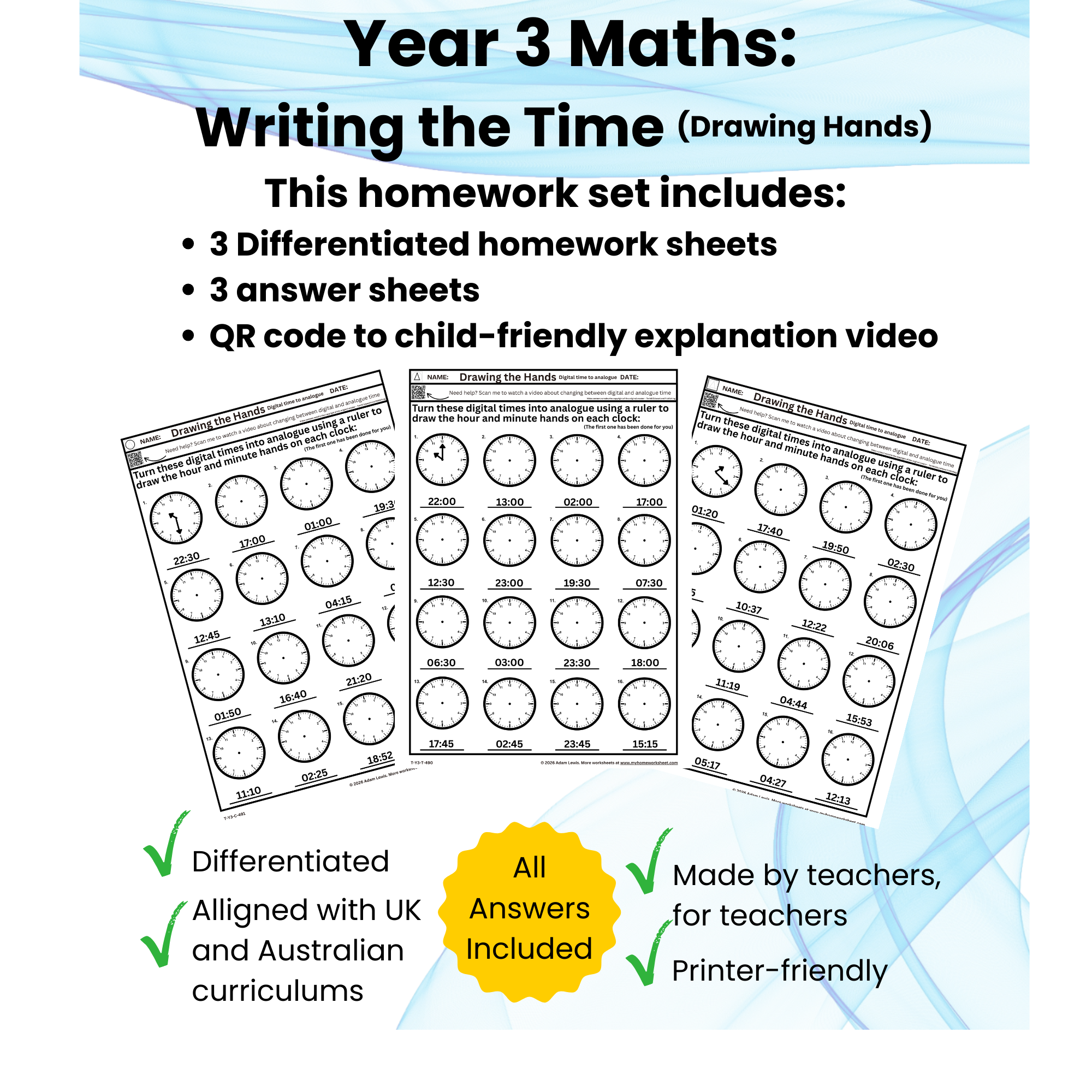 Image 1 of 2
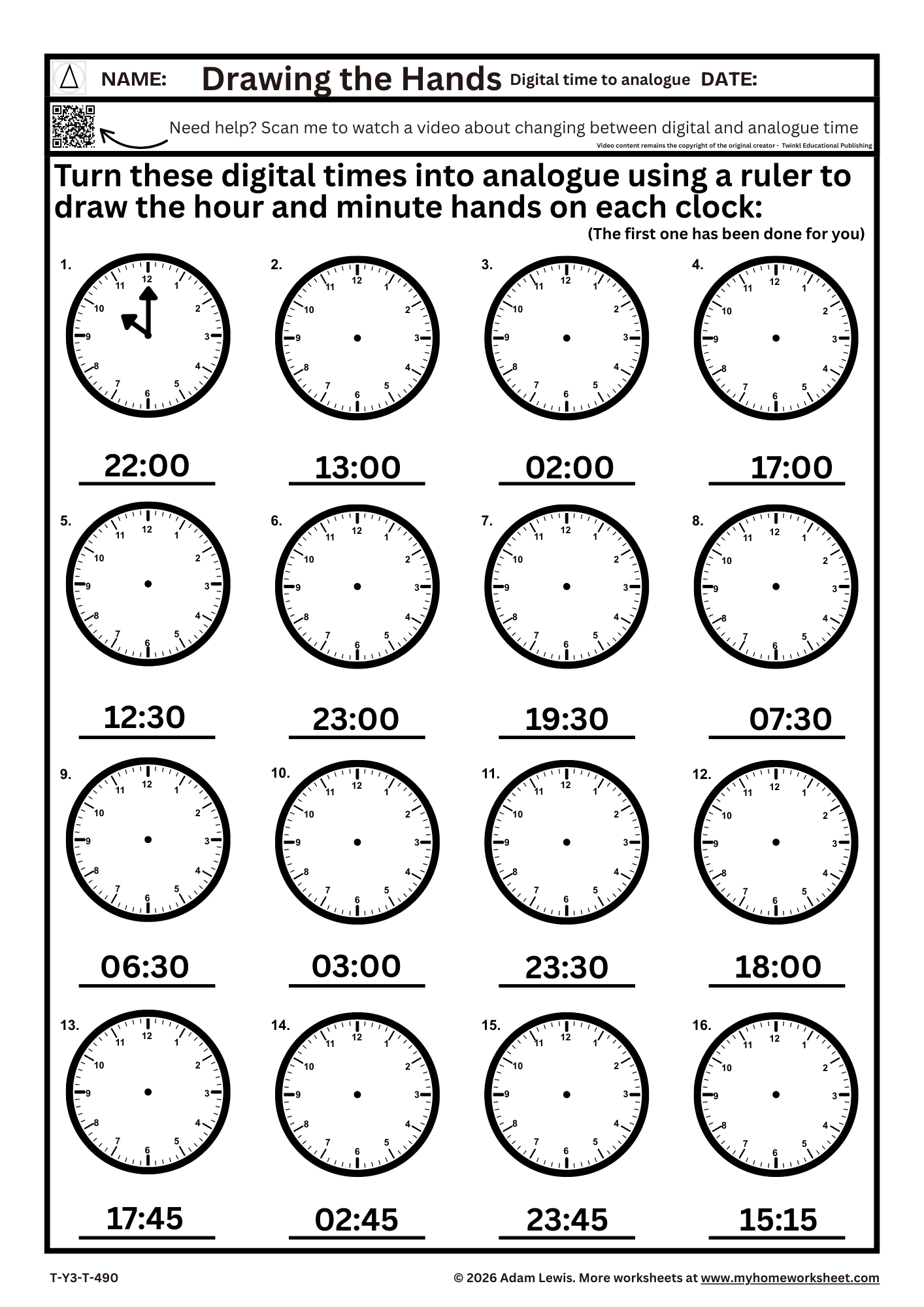 Image 2 of 2